
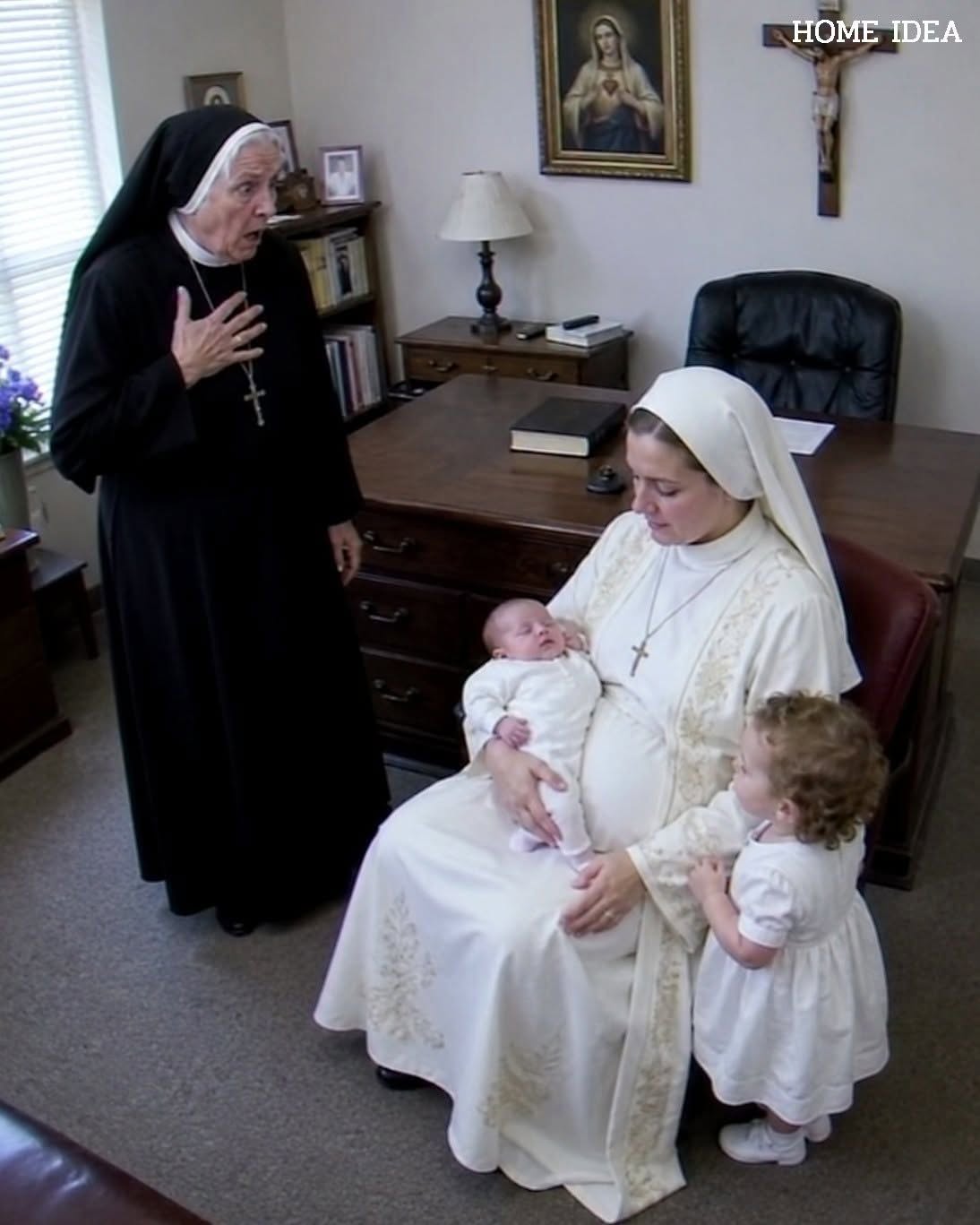
“About what?”
“I do not know.”
Lucía leaned closer.
“That is a troubling answer.”
Esperanza looked down at Miguel. The child’s eyes had opened, dark and trusting.
“There are pieces missing,” she said quietly.
“Pieces of what?”
“My memory.”
Lucía’s hand stopped beside the bread plate.
“What do you mean?”
Esperanza searched for words.
“There are mornings when I wake and feel as though I have forgotten a dream. Not an ordinary dream. Something important. I can almost see a room, or hear a voice, but then it vanishes.”
“Has this happened recently?”
“It has happened for years.”
“Why have you never told anyone?”
Esperanza gave a small, embarrassed shrug.
“I thought it was exhaustion. Then Tomás was born. Then Miguel. There was always something more urgent.”
Lucía’s expression softened, but concern remained in her eyes.
“You should tell Mother Caridad.”
“She already doubts me.”
“She does not doubt you.”
Esperanza looked toward the doorway again.
“She doubts the story I am able to give her.”
“That is not the same thing.”
“No,” Esperanza said. “But it feels the same when you are the person without answers.”
Tomás pushed his wooden spoon toward her.
“Horse for Mama.”
Esperanza accepted it and smiled.
“Thank you.”
He leaned against her arm, satisfied.
Whatever else remained uncertain, these children were real. Their laughter, their hunger, their warm hands, their sleepy weight against her shoulder—none of that could be questioned.
Yet for the first time, Esperanza wondered whether loving them had made her too willing not to ask how they had come to be.
Doctor Paloma arrived before ten.
Her gray motorcar stopped just beyond the convent gate, and Sister Beatriz hurried to admit her. The doctor stepped inside carrying a black medical case, her hair pinned beneath a simple hat.
Mother Caridad waited in the entry hall.
“You came quickly.”
“You sounded worried.”
“I am worried.”
Paloma removed her gloves.
“Where is Esperanza?”
“In the kitchen with the children.”
“May I examine her in the infirmary?”
Mother Caridad nodded.
As they walked, the doctor’s gaze moved over the corridors with an attention that seemed too deliberate. She glanced at the locked linen room, the chapel passage, and the narrow staircase leading toward the unused guest quarters.
Mother Caridad noticed.
“You are looking for something.”
“I am remembering the layout.”
“You have visited us for eleven years.”
“I know.”
They reached the infirmary door.
Mother Caridad took the handkerchief from her pocket and unfolded it.
The strip of tape lay in the center.
Doctor Paloma stared at it.
“Is it yours?” Mother Caridad asked.
“It is ordinary surgical tape.”
“That was not my question.”
Paloma’s eyes lifted.
“It could have come from my case during an earlier visit.”
“It was fresh.”
“How can you be certain?”
“It still had adhesive on it.”
The doctor pressed her lips together.
“Mother Caridad, let me examine Esperanza before we create explanations from scraps.”
“Very well.”
But when Paloma reached for the door, Mother Caridad said, “I have trusted you with the health of every woman in this convent.”
The doctor’s hand remained on the latch.
“I know.”
“I would like to continue doing so.”
Paloma turned.
There was no anger in her face. Only sadness.
“You may find,” she said softly, “that trust and complete knowledge are not always the same thing.”
Before Mother Caridad could answer, footsteps approached.
Sister Esperanza appeared with Lucía. Miguel slept in a cloth cradle against Lucía’s chest, while Tomás held her hand.
Esperanza looked from the doctor to Mother Caridad.
“You came quickly.”