
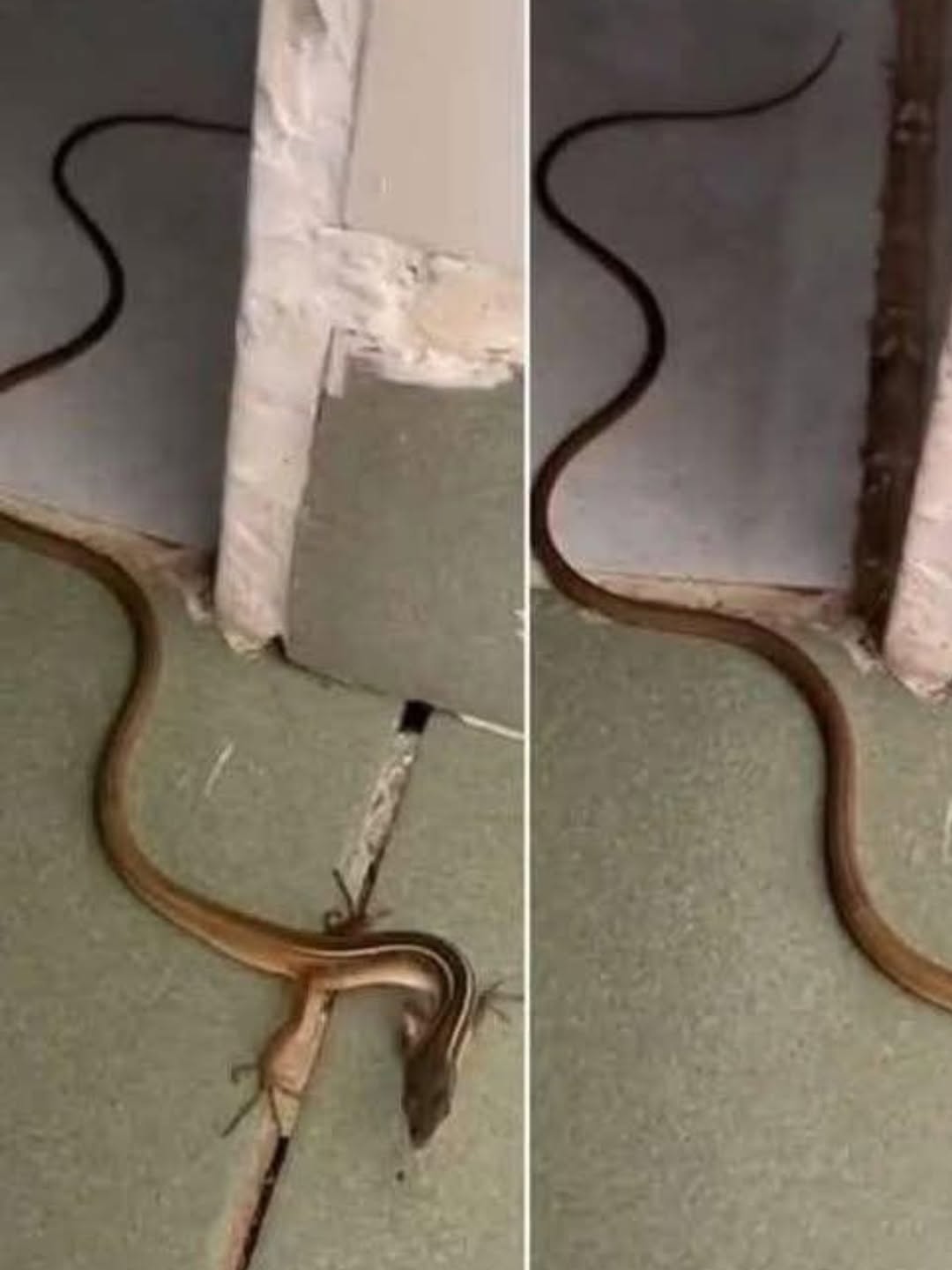
Do not try to kill the snake. A frightened, injured snake is far more dangerous than one left alone. Attempting to kill a snake dramatically increases your risk of being bitten.
Do not try to capture it. Even non-venomous snakes can bite. Their mouths harbor bacteria that can cause serious infection.
Do not corner it. A snake that can’t escape may become defensive. Give it space and an escape route out of the room (if possible).
Step 3: Call for Help (When and Who to Contact)
You do not need to handle this alone.
Call animal control if: The snake is in a living area (kitchen, bedroom, living room) and you cannot safely isolate it. Animal control officers are trained to capture and relocate snakes.
Call a wildlife removal service if: The snake is venomous, large, or inaccessible (inside a wall, under a heavy appliance). Wildlife removal specialists have the tools and training to handle venomous species.
Call a neighbor (only if): You are certain the snake is non-venomous and you just need moral support. Do not ask an untrained neighbor to handle a snake you’re unsure about.
Emergency services (911) are NOT appropriate for most snake encounters. Reserve 911 for actual medical emergencies—like if someone has been bitten. Animal control is the right resource.
What to tell the dispatcher:
Where the snake is (room, furniture, location within the room)
Size and color (from memory, don’t go back to look)
Whether you think it’s venomous (and why)
Whether anyone has been bitten
Step 4: If the Snake Is Venomous – Extra Precautions
This section matters. Venomous snakes in North America include rattlesnakes, copperheads, cottonmouths (water moccasins), and coral snakes. Different regions have different species.
If you suspect a venomous snake:
Do not attempt to capture or kill it. Period. The majority of venomous snakebites occur when people try to handle or kill the snake.