

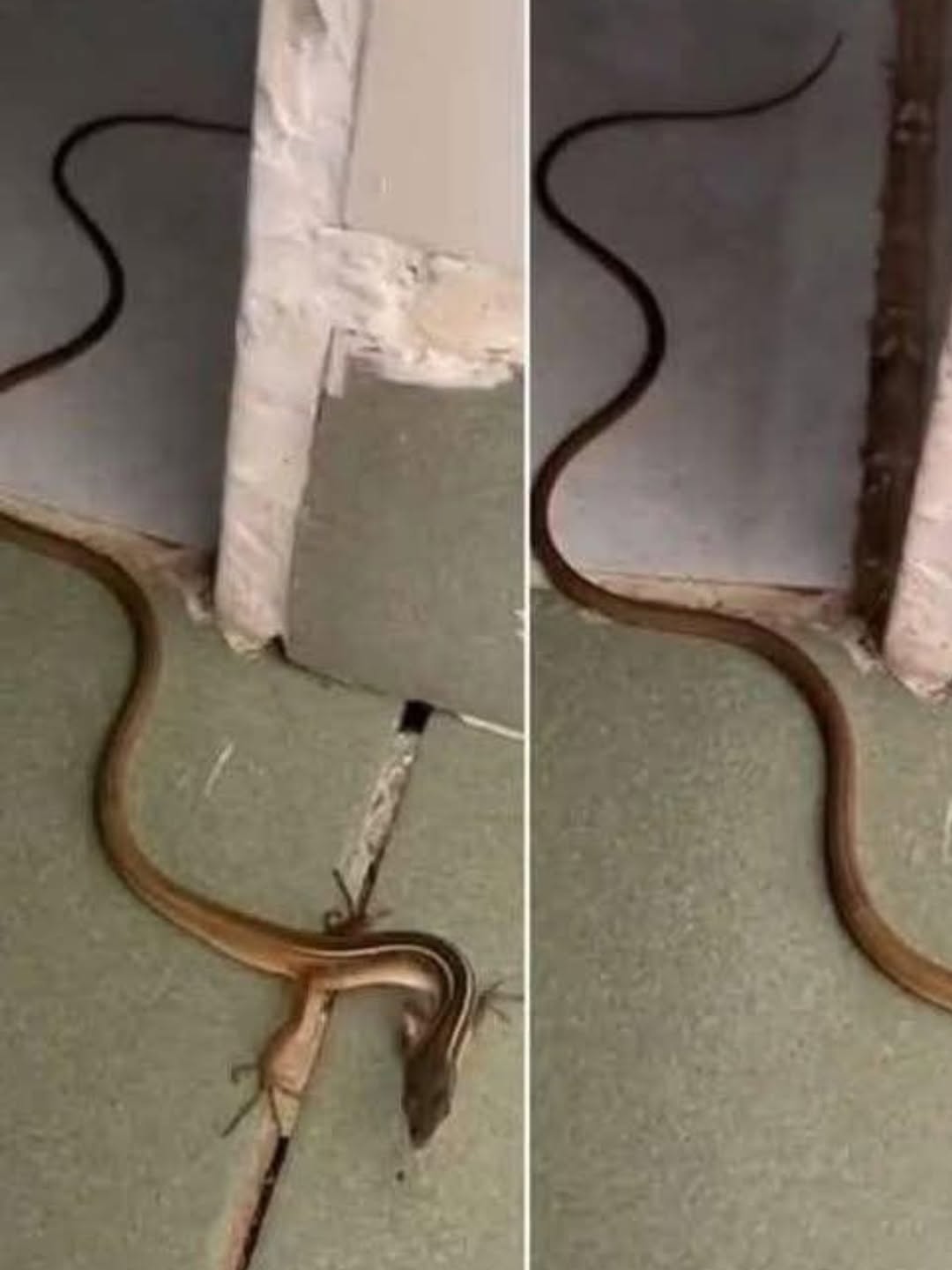
Before you do anything else, try to identify the snake. This sounds scary, but it’s actually simple.
From across the room, note:
Color and pattern: Solid, banded, blotched, or diamond?
Head shape: Triangular heads often (but not always) indicate venomous species. Rounded heads usually indicate non-venomous.
Size: Small (under 12 inches), medium (1-3 feet), or large (over 3 feet)?
Body shape: Thick and heavy (like a rattlesnake) or thin and slender (like a garter snake)?
The challenging reality: Most people cannot accurately identify snakes from a distance, especially when panicking. If you are unsure—assume it could be venomous and keep your distance.
What NOT to do: Do not get close to examine the head. Do not attempt to handle or capture the snake yourself. Do not poke it with a broom or object to “see what it does.”
Step 2: Protect Yourself and Others (The Calm Method)
Here’s what to do in the first 60 seconds.
First: Isolate the snake. If possible, close the door to the room where the snake is. Slide a towel under the door to prevent it from moving into other areas. This contains the problem.
Second: Move people and pets out of the room. Calmly. No running, no screaming. Snakes sense vibrations. Sudden movements and loud noises stress them—and a stressed snake is more likely to defend itself.
Third: Keep eyes on the snake (if you can safely do so). Watch from across the room. Note where it goes if it moves. This information is invaluable when help arrives.
What NOT to do: