
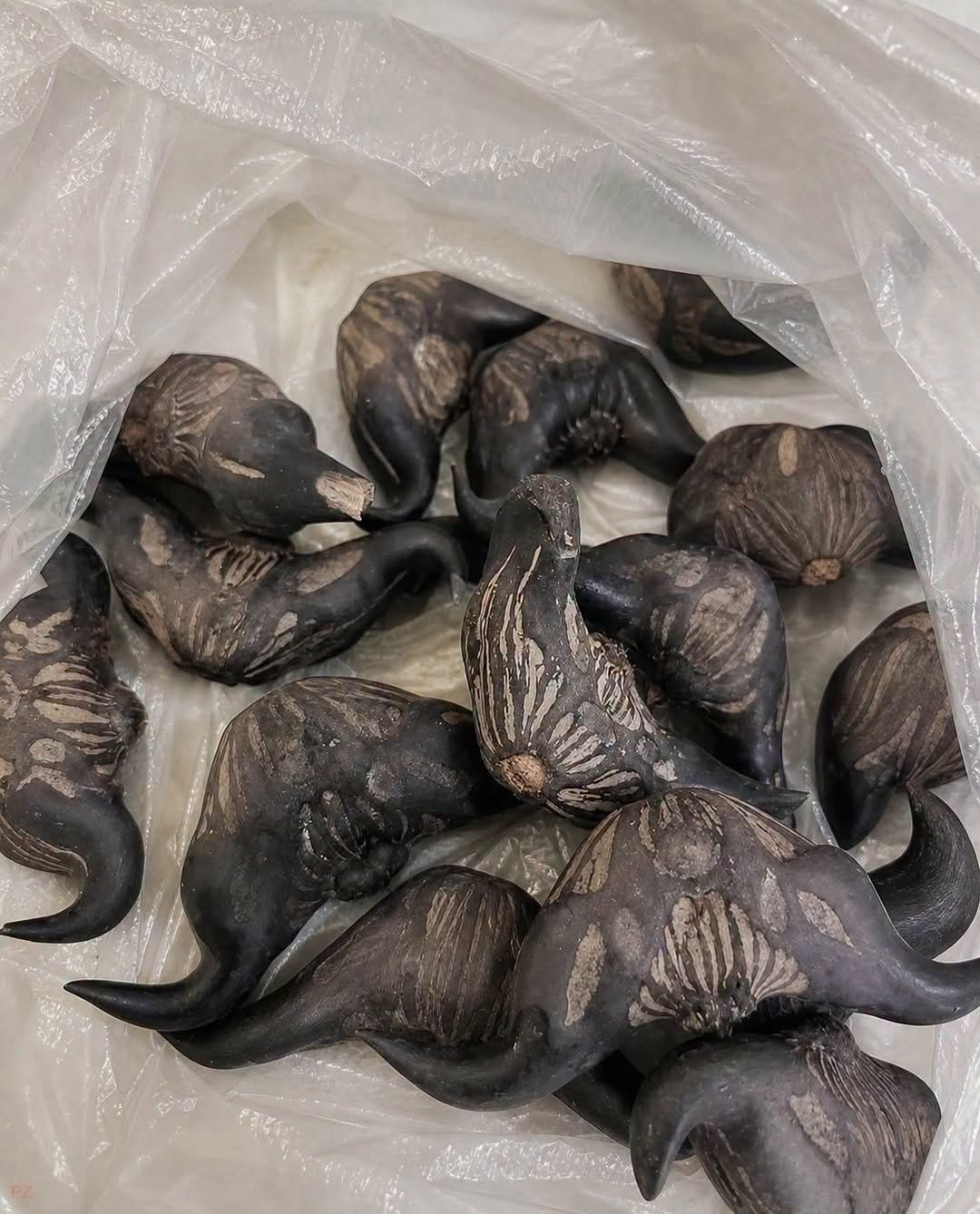
Unlike an apple or peach, you can’t simply bite through the skin.
The shell is hard and woody, so the fruit needs to be opened carefully.
What Is Inside?
This is where the surprise comes in.
Inside the dark shell is a relatively pale, firm, starchy edible portion.
When properly cooked, the flesh can have a texture somewhat reminiscent of a chestnut.
It can be mildly sweet, nutty, earthy, or starchy depending on the species and preparation.
That’s why these fruits have traditionally been used in various dishes.
The contrast is striking:
Outside: dark, hard, and covered in horns.
Inside: pale, starchy, and edible.
It is one of those foods that looks completely different before and after preparation.
Are They Actually Related to Chestnuts?
Despite the name “water chestnut,” water caltrops are not the same thing as the familiar Chinese water chestnut (Eleocharis dulcis).
This is an important distinction.
Chinese water chestnuts are aquatic sedge plants that produce small, rounded underground corms.
Water caltrops are fruits produced by plants in the genus Trapa.
The two foods can both be eaten and have somewhat starchy textures, but botanically they are quite different.
So if someone calls these “water chestnuts,” the name can be confusing.
How Do People Eat Them?
Traditionally, the edible interior is obtained by cooking the fruit and then removing the hard shell.
Preparation varies depending on the region and species.