

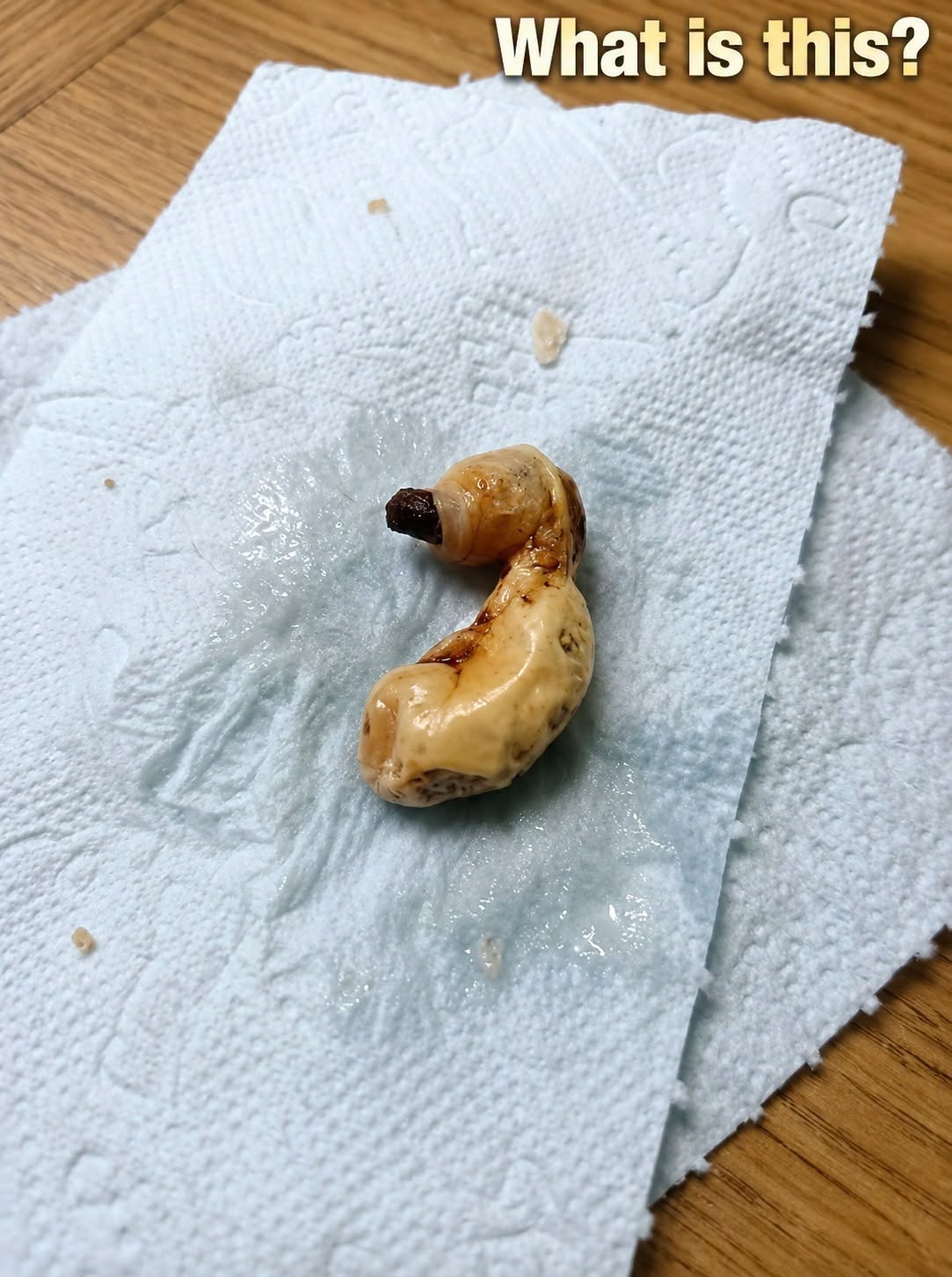
Once someone said, “I think it’s alive,” the entire atmosphere changed.
That sentence gave our brains a story.
Suddenly, every detail seemed to support it.
The curved shape looked like a body.
The dark tip looked like a head.
The marks looked like veins or injuries.
The wet surface looked like mucus.
None of those interpretations had seemed obvious before we became afraid.
Fear changed the way we examined the object.
This is a form of top-down processing. Our expectations can influence how we interpret sensory information.
If someone shows you a blurry image and says, “There’s a dangerous animal hidden in this photo,” you may begin searching for eyes, teeth, or claws.
If the same person says, “There’s a child’s toy in this photo,” your brain searches for completely different patterns.
The image hasn’t changed.
Your expectations have.