
“He also recommended that their parentage remain sealed.”
“I know that too.”
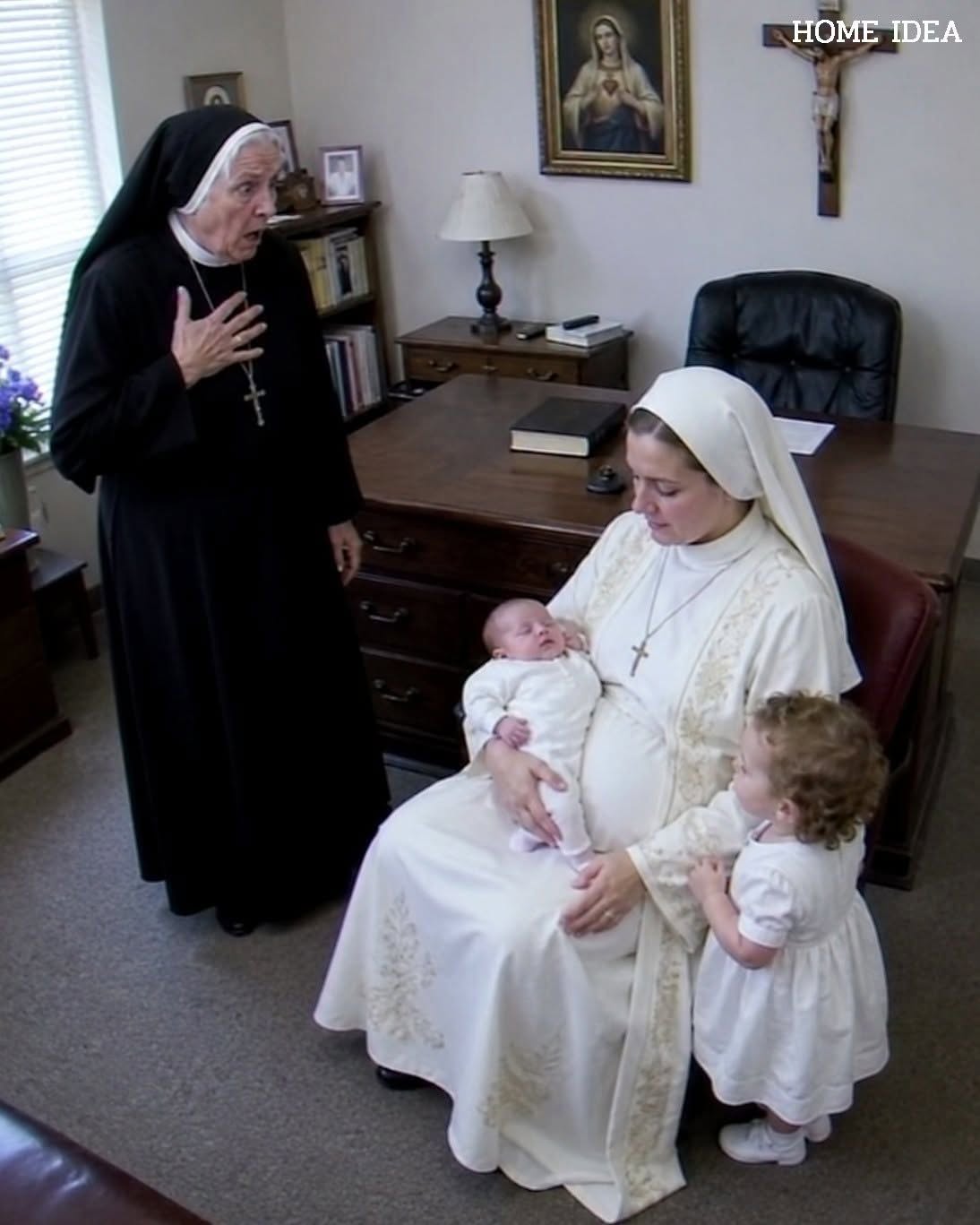
Mother Caridad turned.
“And you accepted this?”
“I objected.”
“Not strongly enough.”
The words landed hard.
Paloma’s face tightened.
“No,” she said. “Not strongly enough.”
For the first time that day, Mother Caridad saw no defense in her. Only regret.
“I told myself I was protecting Esperanza from scandal,” Paloma continued. “I told myself that if she was healthy and the children were loved, forcing an investigation might cause more harm than good. But perhaps I was also protecting myself from admitting I had lost control of something I helped begin.”
Mother Caridad looked at her for a long moment.
Then she returned to the desk.
“Regret is useful only if it changes what we do next.”
“What do you suggest?”
“We begin with what can be proven.”
She placed the letter from Elena beside the anonymous note.
“Is Elena alive?”
“I believe so.”
“Where?”
“The last address I had was in San Aurelio.”
“That is four hours away.”
“Yes.”
“Does she know about Tomás and Miguel?”
Paloma hesitated.
“I do not know.”
“You have said those words too many times today.”
“They are still the truth.”
Mother Caridad looked through the office window.
In the garden, Esperanza sat beneath the old fig tree with Miguel in her arms. Lucía crouched beside Tomás, helping him arrange pebbles in a row.
A family had formed inside the convent, though no one had planned it.
Whatever biology revealed, these bonds were not temporary.
“We will contact Elena,” Mother Caridad said.
“And Father Esteban?”
“Him too.”
“You may need diocesan permission.”
“I have spent half my life asking permission to do what conscience already required.”
Paloma almost smiled.
“Mother Inés used to say the same.”
Mother Caridad looked back at her sharply.
“She also left us a maze of secrets.”
“She believed secrets could protect people.”
“They can,” Mother Caridad said. “For a time. Then they begin protecting themselves.”
That afternoon, Esperanza asked to see the old guest parlor.
Mother Caridad unlocked the passage and went with her.
The room had not been used in years. Dust lay across the table, and the air smelled of dry wood and lavender sachets. Blue curtains framed the single window.
Esperanza touched the fabric.
The color matched the thread on the tape.
“Do you remember this place?” Mother Caridad asked.
Esperanza walked slowly toward the table.
“A little.”
“What do you see?”
“Elena sitting there.”
She pointed to the chair near the window.
“She wore a yellow dress. Not bright yellow. The color of old sunlight.”
Mother Caridad said nothing.
Esperanza moved to the opposite chair.
“I was sitting here.”
“And Mother Inés?”
“Near the door.”
“Doctor Paloma?”
“By the window.”
Her voice grew more certain with each detail.
“There was another person.”
Mother Caridad’s attention sharpened.
“Who?”
“I cannot see his face.”
“A man?”
“Yes.”
“Was it Father Esteban?”
“I do not know.”
Esperanza closed her eyes.
“He had a ring.”
“What kind of ring?”
“A dark stone.”
Mother Caridad had seen Father Esteban wear a silver ring set with black onyx.
“Did he speak to you?”
“He said families were made by sacrifice.”
Esperanza’s expression tightened.
“I did not like that.”
“What did you say?”
“I said families were made by staying.”
The answer came quickly, as though she had been waiting years to hear herself say it.
Mother Caridad moved closer.
“That sounds like you.”
Esperanza smiled faintly.
“I hope so.”
She ran her hand over the dusty tabletop.
“There was a box here.”
“What kind?”
“Wooden. Small. Mother Inés placed papers inside it.”
“Consent forms?”
“Perhaps.”
Esperanza opened her eyes.
“She said she would keep them where no one could use them without my permission.”
Mother Caridad looked around the room.
“Did she say where?”
“No.”
They searched the cabinet, the desk, and the shelves.
Nothing.
At last, Esperanza sat down.
“Mother, what happens if Elena is the biological mother of Tomás and Miguel?”
“We do not know that she is.”
“But if she is?”
Mother Caridad pulled the other chair closer.
“What are you afraid of?”
Esperanza looked toward the garden beyond the window.
“That she will want them.”
“They are legally in your care and the convent’s care.”
“That was not my question.”
Mother Caridad understood.
“You are asking whether she will feel they belong to her.”
“Yes.”
“And whether loving her as a sister will require giving them up.”
Esperanza’s eyes filled, though she did not cry.
“I have only just learned she exists, and already I am afraid of what she may ask.”
“That fear does not make you selfish.”
“It feels selfish.”
“Love often arrives carrying more than one loyalty.”
Esperanza folded her hands.
“What would you do?”
Mother Caridad looked toward the distant orchard.
“I would not decide before hearing her truth.”
“And after?”
“After, I would remember that Tomás and Miguel are not questions to be solved. They are children with routines, attachments, and a home. Any choice must begin with their well-being.”
Esperanza nodded.
The answer steadied her.
Then she glanced at the blue curtains again.
“Mother?”
“Yes?”
“If someone used this room recently, there should be signs.”
Mother Caridad followed her gaze.
The floor was dusty.
Everywhere except near the far wall.
A narrow line beneath the curtains appeared cleaner than the rest.
Together, they drew the fabric aside.
Behind it stood a small door Mother Caridad had forgotten.
It opened into a storage alcove built into the thickness of the stone wall.
The lock had been broken long ago.
Inside were folded blankets, an empty water pitcher, and a wooden chest.
Esperanza’s breath caught.
“That is the box.”
Mother Caridad lifted it carefully onto the table.
The wood was dark with age. Its brass clasp opened without resistance.
Inside lay several documents tied with blue ribbon.
There was Esperanza’s original consent form.
A letter from Elena withdrawing from the arrangement.
A statement signed by Doctor Paloma.
And beneath them, three sealed envelopes.
Each bore a date.
The first was written one month before Esperanza became pregnant with Tomás.
The second was written one month before Miguel was conceived.
The third was dated six weeks earlier.
Mother Caridad opened the newest envelope.
Inside was a medical appointment card from a private clinic in the city.
The patient’s name was listed as Ana Valdés.
Esperanza touched the card.
“That is me.”
The appointment date was seven weeks earlier.
Mother Caridad turned it over.
On the back, someone had written a brief note by hand.
She read it aloud.
You asked me long ago to keep the truth until you were strong enough to choose it freely. I fear I waited too long.
There was no signature.
But beneath the sentence was an address.
Not for the clinic.
Not for Father Esteban.
For a house in San Aurelio.
The same town where Elena had last lived.
Esperanza sat very still.
“Do you think my sister wrote this?”
“I do not know.”
“Then we must go there.”
Mother Caridad looked at the appointment card again.
“Yes.”
“When?”
“Soon.”
Esperanza’s gaze moved toward the corridor, where Tomás could be heard asking Sister Lucía whether stones went to sleep.
“I want the children to remain here with Lucía.”
“That is sensible.”
“And Doctor Paloma should come with us.”
“I agree.”
Esperanza drew a slow breath.
For years, she had accepted uncertainty as a form of faith. Now she understood that faith did not always mean waiting quietly. Sometimes it meant walking toward an answer without knowing what it would require.
Mother Caridad gathered the documents.
As she lifted the final page from the box, something slipped from beneath it and landed on the table.
A photograph.
It showed two young women standing outside a small house.
One was unmistakably Elena. She had Esperanza’s eyes and the same gentle tilt to her smile.
The other woman was Sister Esperanza herself.
She was not wearing her habit.
She stood with one hand resting over the beginning curve of a pregnant belly.
On the back of the photograph, in Esperanza’s handwriting, were seven words:
I have chosen this. Please help me remember.
Esperanza stared at the sentence.
Mother Caridad turned the photograph over again.
In the window of the house behind the two sisters, a third figure stood partly hidden by the curtain.
A man wearing a ring with a dark stone.
And beneath the photograph, written in a different hand, was a final line:
Ana remembered everything once before.