
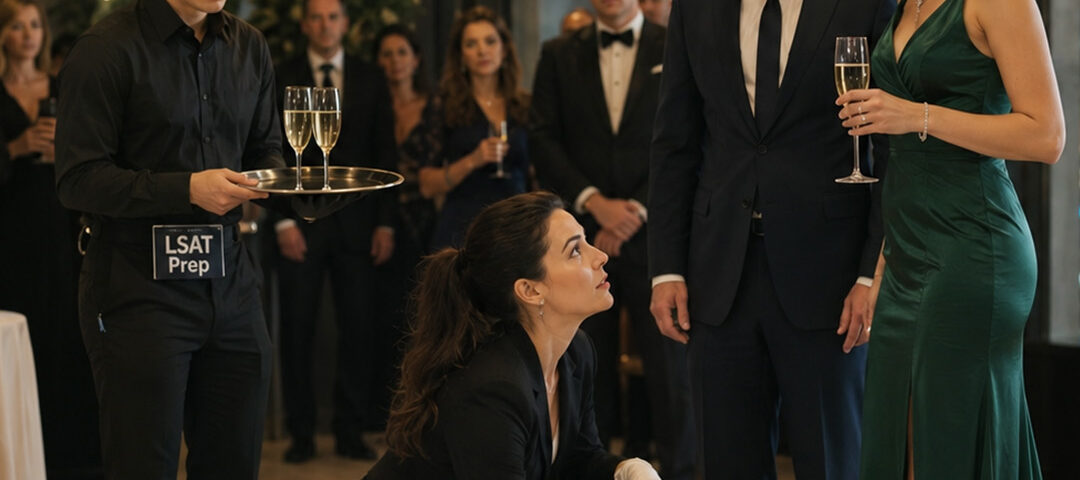
I walked away, but I wasn’t gathering evidence anymore.
The trial was over.
The verdict on her character was guilty.
Now I was just waiting for the sentencing phase, and I needed to make sure the punishment fit the crime.
I traded the tray of crab cakes for a bottle of vintage Dominion and moved toward the corner table.
This was the inner sanctum.
The air here was thinner, colder.
It was where the partners stood in a tight phalanx of black tuxedos, their backs turned to the rest of the party.
They weren’t discussing the wedding.
They were discussing the kill.
As I approached, Sterling Thorne was leaning in, his voice dropped to a conspiratorial purr that carried the weight of pure arrogance.
“The Meridian antitrust merger is a done deal, gentlemen,” Sterling said, swirling his scotch. “$40 billion. The biggest payout this firm has seen in a decade.”
I poured champagne into the glass of the man next to him, a senior partner I recognized from his bio on the firm’s website.
He looked nervous.
“I don’t know, Sterling,” the partner said. “The Department of Justice is breathing down our necks, and the case just got assigned to Judge Vance in the Second Circuit. I’ve heard she’s meticulous.”
My hand didn’t shake.
I filled the glass to the perfect rim, not spilling a drop.
I waited.
Sterling laughed, a sound like dry leaves crunched under a boot.
“Vance. Lydia Vance, please. She’s a diversity hire with a bleeding heart. She spent her early career in family court. She cares about feelings, not fiscal quarters.”
I stepped back into the shadows, clutching the cold bottle against my apron.
Exhibit A.
Underestimation of opposing counsel.
“But the environmental impact reports,” the partner pressed. “If Vance sees the toxicity levels in the water table data, she’ll block the merger. It’s a violation of the Clean Water Act.”
Sterling took a long, slow sip of his drink.
“She won’t see them.”
The circle went quiet.
“We’re not going to shred them, are we?” someone whispered.
“We’re not amateurs,” Sterling scoffed. “We’re going to bury them. We dumped the toxicity reports in the middle of the discovery handover box 4000, right between the cafeteria receipts and the parking validation logs. She’s a federal judge with a backed-up docket. She doesn’t have the time, and she certainly doesn’t have the brain power to dig through 2 million pages of discovery to find the one chart that matters.”
I felt a cold thrill race down my spine.
It was a sensation I usually only felt when a jury foreman stood up to read a verdict.
He had just admitted to spoliation of evidence.
He had just admitted to a conspiracy to defraud the court, and he had done it in front of the very judge he planned to deceive.
“We steamroll her,” Sterling concluded, raising his glass. “We walk in there, we use big words, we bury the bodies, and we walk out with $40 billion to the Meridian merger.”
“To Meridian,” the men chorused.
I adjusted the towel over my arm.
In my head, I wasn’t serving drinks anymore.
I was drafting a bench warrant.
“More champagne, gentlemen?” I asked, my voice invisible.
“Keep it coming, sweetheart,” Sterling said, turning his back to me again.
I walked away, the bottle heavy in my hand.
He thought he was burying the evidence.
He didn’t realize he was burying himself.
The merger was the main course, but Sterling wasn’t done feasting.
He was drunk on power now.
The kind of intoxication that makes men careless.
He draped an arm around the senior partner’s shoulder, shifting the topic from federal crimes to family triumphs.
“And it’s not just the firm winning today,” Sterling beamed, gesturing toward his daughter across the room. “Madison just secured the summer associate position at the solicitor general’s office. The D.C. internship.”
The partner raised an eyebrow.
“Impressive. That program accepts what? Three applicants a year. It’s usually reserved for the top 1% of the Ivy League.”
I froze.
I knew that program.
I sat on the oversight committee.
The selection process was blind, rigorous, and based entirely on merit.
Madison Thorne, who I had just watched abuse a server for a mistake she didn’t make, did not have the temperament or the transcript for that seat.
Sterling chuckled, a low, oily sound.
“Let’s just say the selection committee suddenly remembered how much they enjoy the new reading room I funded. They had to make some administrative adjustments.”
“Adjustments?” the partner asked.
“There was some girl,” Sterling waved his hand dismissively. “Some nobody from a state school. Perfect LSAT score, apparently a real striver, but she doesn’t have the pedigree. We couldn’t let a slot like that go to waste on someone who doesn’t have the connections to use it, so her application got misplaced.”
My blood ran cold.
Continued on next page:
