
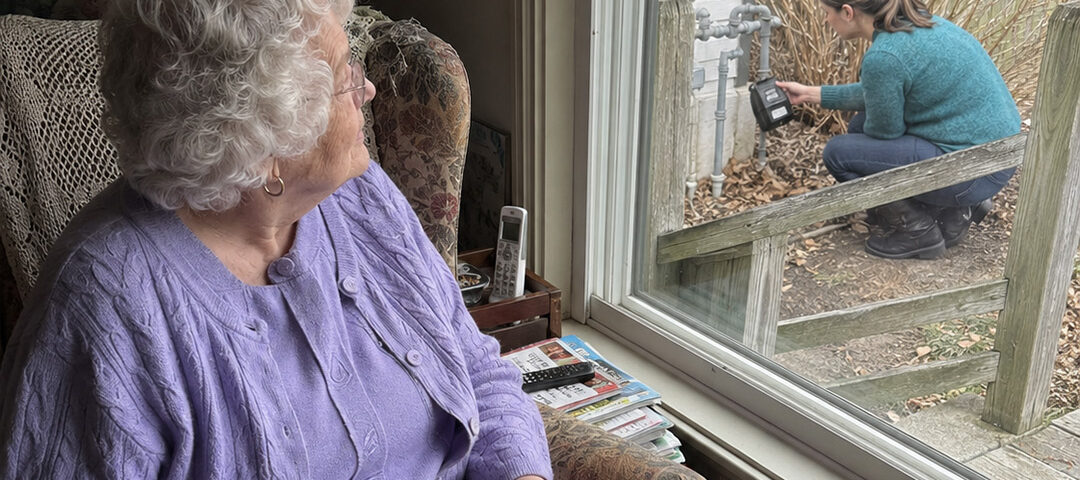
My name is Nora Caldwell and I was 32 the year I learned what a manila folder could do to a family. My grandmother turned 79 on a Saturday in October. She baked her own cake, vanilla with buttercream roses, her specialty since before I was born. She set the table for eight paper napkins, the good plates, dried hydrangeas from her garden.
Nobody came. My parents were skiing in Aspen. My brother sent a text at 4:15. Happy Bday, Gran.
Skiing is amazing. My father didn’t text at all. My mother posted a ski goggle selfie to her church group chat with the word blessed. I drove 3 hours from Hartford after my shift and found her sitting alone in the kitchen.
Candles melted down to the frosting. The ice cream had gone soft. She looked at me like she wasn’t sure I was real. I cut her a slice.
I sang. The next day, while I was helping her clean the house, two strangers knocked on her door. They handed me a folder, sealed, thick, signed in my grandmother’s own handwriting. What happened after that ended my family as I knew it.
That evening stays pressed into me like a thumbprint in wet clay. I’d left Hartford at 5, still in my work flats, a gas station bouquet on the passenger seat. 3 hours on I-95, then the back roads through Brierwood where the oaks arch over the pavement like a cathedral ceiling. I pulled into her gravel driveway at 8:12.
The porch light was on. Every other window was dark. Inside, the kitchen table told the whole story. Eight place settings.
A centerpiece of dried hydrangeas she’d arranged that morning. The cake sat in the middle. Vanilla buttercream roses. 79 spelled out in pink gel.
The candles burned down to waxy nubs stuck in the frosting. A gallon of Neapolitan had sweated through its carton onto the tablecloth. She was sitting at the head of the table in her lavender cardigan, hands folded around a glass of water.
“Nora.”
She smiled, then frowned.
“Is it Tuesday?”
“It’s Saturday, Gran. Your birthday.”
“Oh.”
She touched the cake.
“I thought I was making this for the church bake sale.”
I set the flowers in a mason jar and fixed her a plate. We ate cake with our hands because neither of us felt like washing forks. I sang happy birthday twice because halfway through the first time she asked me to start over.
At 10, I carried her to bed. She weighed nothing. Her wrist was the width of a paper towel roll. As I pulled the quilt to her chin, she grabbed my hand.
Her eyes went sharp, focused, like a radio catching a signal through static.
“They think I don’t notice,” she whispered.
I waited for more. She was already asleep.
I should tell you who I am in this family. The Caldwells of Brierwood are a particular kind of Connecticut comfortable. My father, Gregory, managed regional accounts for an insurance brokerage until he could golf three times a week and call it consulting.
My mother Diane organized charity galas and sat on the library board. My brother Aaron ran a small construction development firm, Aaron Caldwell Properties, and owned a German sedan that cost more than my annual salary. Then there was me, the paralegal.
I worked at a four-person elder law firm in Hartford. Wills, trusts, guardianship filings. I earned $47,000 a year and studied for the bar at night. My family called me the paperwork one.
At holiday dinners, Diane would tilt her head and say, “Nora is still doing her little legal assistant thing,” like I was selling friendship bracelets at a farmers market.
I didn’t argue. I read fine print. But this house, this house was mine in every way that mattered and no way that counted.
I took my first steps on the kitchen linoleum. Lorraine taught me to read a lease on the back porch when I was 19, her reading glasses perched on her nose, a red pen between her teeth. She co-signed my first apartment because my parents wouldn’t.
I slept in the guest room that night and lay awake tracing the ceiling crack I’d traced since I was six.
Around midnight, I got up for water. On the hallway shelf, behind a framed photo of the family, I found a business card: Brenda Voss, Voss and Dean Realty. On the back was a handwritten note.
Comp value: $680,000. Quick close possible.
I put the card back. My hands were steady, but my stomach wasn’t.
Sunday morning, I scrubbed the kitchen while Lorraine dozed in her recliner. The cake went into Tupperware. The melted candles went into the trash. I wiped buttercream off the good plates and stacked them in the cabinet where they’d sit until whoever came to clear out the house someday.
That thought landed wrong. I shoved it aside.
At 10:15, someone knocked. Two people stood on the porch. The woman was about 60, silver bob, wool coat, leather briefcase, professional. The man beside her was younger, maybe 40, carrying a notary seal in a zippered pouch.
“Nora Caldwell?” the woman asked.
“Yes.”
“My name is Ruth Adler. This is my colleague, Nathan Pruitt. Your grandmother retained my firm 14 months ago.”
She held out a manila folder, thick, sealed with a wax paper flap, my grandmother’s name printed on the tab in blue ink.
“She asked us to deliver this to you,” Ruth said. “Personally. When the time came.”
“When the time came for what?”
Ruth glanced at the recliner through the screen door. Her expression softened by a degree.
Continued on next page:
