
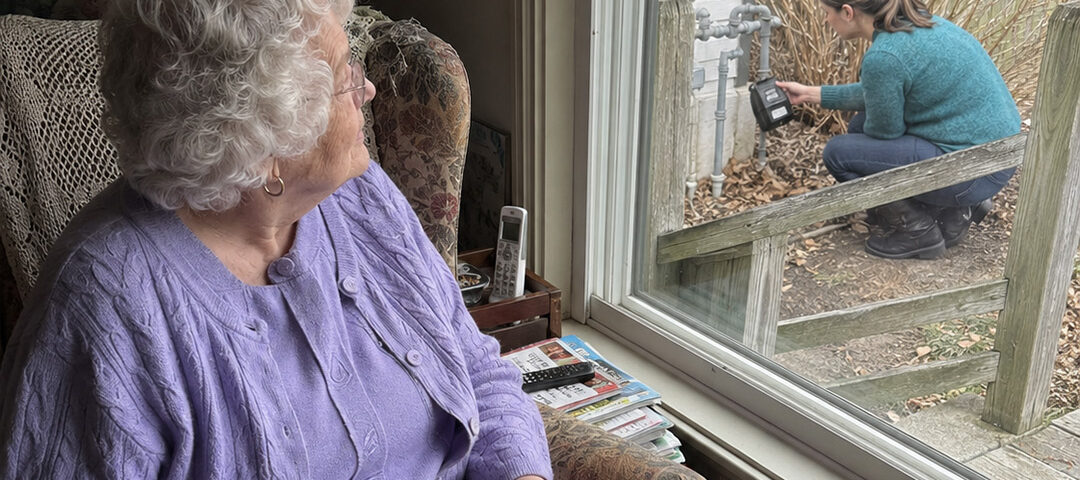
She said it without inflection, but the weight of it settled in my chest like a stone dropped into still water.
My father was Lorraine’s only child. He’d grown up in that kitchen. She’d put him through college, paid for his first suit, danced at his wedding, and when the time came to hand someone the keys to her life, she’d driven past him and gone straight to me because she knew.
She knew Gregory would defer to Diane. She knew Diane would calculate. She knew Aaron would need.
“Your grandmother executed the documents on August 9th of last year,” Ruth continued. “Full capacity. Dr. Mercer, her neurologist, provided a written evaluation that same day, confirming she understood the nature and consequences of what she was signing.”
Ruth tapped the physician’s letter.
“This is your foundation.”
The legal architecture was clean. I recognized every instrument from my work.
Item one, a revocable living trust. Lorraine had transferred the house, the deed, the title, everything, into a trust. The Lorraine E. Caldwell Revocable Living Trust, dated August 9th of last year.
She was the trustee while she had capacity. I was the successor trustee. If she became incapacitated, legal control of the house passed to me, not my father, not Aaron.
Me.
Item two, a durable power of attorney. Lorraine had named me her agent for all financial and healthcare decisions. The durability clause meant it survived her incapacity. It didn’t expire when she got sick. It activated.
Item three, the physician’s letter. Dr. Mercer had examined Lorraine on August 9th and documented that she demonstrated full testamentary capacity. She understood what a trust was. She understood what a power of attorney did.
She understood she was placing her house beyond the reach of anyone except the granddaughter she trusted.
“So the house isn’t hers anymore,” I said.
“Technically correct. The house belongs to the trust. Lorraine can’t sell it as an individual. And under this trust structure, no one holding a personal power of attorney over Lorraine has authority over assets already transferred into the trust. Only the trustee can authorize a sale.”
“And the trustee is me.”
“Once Lorraine is determined to lack capacity, yes. And based on what you’ve described, she left the stove on three times last month. She got lost two blocks from home.”
Ruth nodded.
“The successor trustee provisions are likely already active.”
Then she leaned forward.
“Miss Caldwell, there’s something else you should know. If your family has had your grandmother sign anything recently, a new power of attorney, a listing agreement, while she lacked capacity, those documents may not be enforceable.”
She let that sit.
They may have had her sign something newer.
I drove back to Brierwood that evening. The house was quiet. The porch light was on, same as always.
Through the front window, I could see Lorraine in her recliner, television murmuring, her reading glasses folded on the armrest. I let myself in with the spare key she’d given me when I was 16, the one she’d never given my parents.
“Gran.”
She looked up for a moment, 3 seconds, maybe four. Her eyes were absolutely clear. Not the soft confusion of most days. Not the pleasant fog.
Clear like creek water over gravel.
“You went to see Ruth,” she said.
I stopped in the doorway.
“You remember Ruth?”
“I remember enough.”
She picked up her reading glasses and turned them in her hands.
“I remember I was scared, and I went to a lawyer, and I told her what Diane would do. Did I get it right?”
I sat on the arm of the couch.
“You got it exactly right, Gran.”
“Good.”
She put the glasses on, then took them off again, as if she’d forgotten why she’d reached for them.
“They’ve been bringing people through the house Tuesdays when the nurse is here. I hear the doors open and close. Strangers looking at my kitchen.”
“I know.”
“Your father won’t look at me when he visits. He talks to the walls.”
She pressed her lips together.
“Aaron brought papers. I don’t remember what I signed.”
I took her hand.
“It doesn’t matter what you signed. You already took care of it.”
She squeezed my fingers. Her grip was thin but deliberate.
“I’m not gone yet, Nora.”
The words hung in the kitchen air between us, fragile and fierce. By tomorrow, she might not remember saying them, but I would.
I would remember for both of us.
Aaron showed up Wednesday. He didn’t knock. He never knocked. Just walked in with his car keys jingling and his smile already on. The way he entered every room, like the room should be glad he’d arrived.
“Hey, Nor.”
He kissed the top of my head. He smelled like cedar cologne and the leather interior of a $50,000 SUV.
“Checking in on Gran. That’s sweet.”
“I’m staying for a while.”
“Oh, yeah?”
He opened the fridge, helped himself to a LaCroix, and leaned against the counter like he owned the place.
“Taking some time off from the paralegal gig.”
He said paralegal the way you’d say hobby.
“Aaron, I know about the listing.”
His LaCroix paused halfway to his mouth. One beat, two, then the smile adjusted. Not gone, just reclassified. Warmth to negotiation.
“Look, I know it seems fast, but here’s the thing. The company’s in a rough patch. I’ve got a balloon payment coming due in 8 weeks. $740,000. If I miss it, the bank takes everything. Every project, every contract, 3 years of work gone.”
“So, you’re selling Gran’s house.”
“I’m helping the family manage an asset that Gran can’t manage herself.”
He set the can down.
“Nora, the money solves everything. Gran gets a nice facility. Dad and Mom stop worrying. I keep my business. Everybody wins.”
“Except Gran.”
“Gran doesn’t know what day it is.”
“She knows people are walking through her house.”
Aaron’s jaw tightened. He stepped closer.
“Don’t make this difficult. We’re family. Family helps family.”
“Is that what you told her when you brought the papers?”
He stared at me. Then the smile came back, but harder now. Performative.
“It’s basically sold already, Nora. The closing’s set.”
He left his empty can on the counter and walked out without rinsing it.
That night, I searched in the bottom of the hallway credenza behind a stack of old Guideposts magazines. I found what they’d had her sign: a power of attorney, dated September 3rd, barely two months ago.
It named Gregory Caldwell as Lorraine’s agent for all financial and property decisions. Stapled to it was a listing authorization for the house, also dated September 3rd, granting Aaron Caldwell the right to act as seller’s representative.
I carried both documents to the kitchen table and laid them beside the originals from Ruth’s folder.
The signature differences hit me before I finished unfolding the pages.
Lorraine’s trust documents from 14 months ago: strong pen pressure, the loops clean and confident, every letter connecting to the next with that distinctive tail on the capital L. I knew this hand. This was the woman who’d written grocery lists in cursive and signed my high school permission slips with a fountain pen.
The September power of attorney: trembling lines. The L barely rose above the baseline. The loops collapsed. The pen had lifted between letters, leaving gaps where flow should be.
This was not the hand of a woman who understood what she was signing. This was the hand of a woman who was told where to press down.
I pulled up the calendar on my phone and checked the date. September 3rd.
My stomach dropped.
September 3rd was the same week Lorraine had been taken to the ER after a fall. I’d received a text from Diane.
Gran took a tumble. Nothing serious. She’s resting.
And I thought nothing of it.
The discharge summary, which I found in the mail pile, noted: patient disoriented, intermittent confusion, recommend neurological follow-up.
They’d had her sign a power of attorney during the same week she’d been hospitalized for confusion.
I took photos of everything. Then I called Ruth.
Ruth came to the house on Friday. Not her office, the house. She said it mattered that we do this at Lorraine’s kitchen table.
I understood why the moment she laid everything out.
The table was old maple, scratched from 50 years of Thanksgivings, stained with coffee rings that Lorraine had always said gave it character. Now it held five documents in a row, edges aligned like evidence at a hearing.
Document one, the recorded trust deed filed with the Brierwood Town Clerk on August 12th of last year. The house had been legally transferred into the Lorraine E. Caldwell Revocable Living Trust 14 months ago. It was stamped, indexed, and recorded. Public record.
